Citroën 2 CV Concept Unveiled at Paris Motor Show
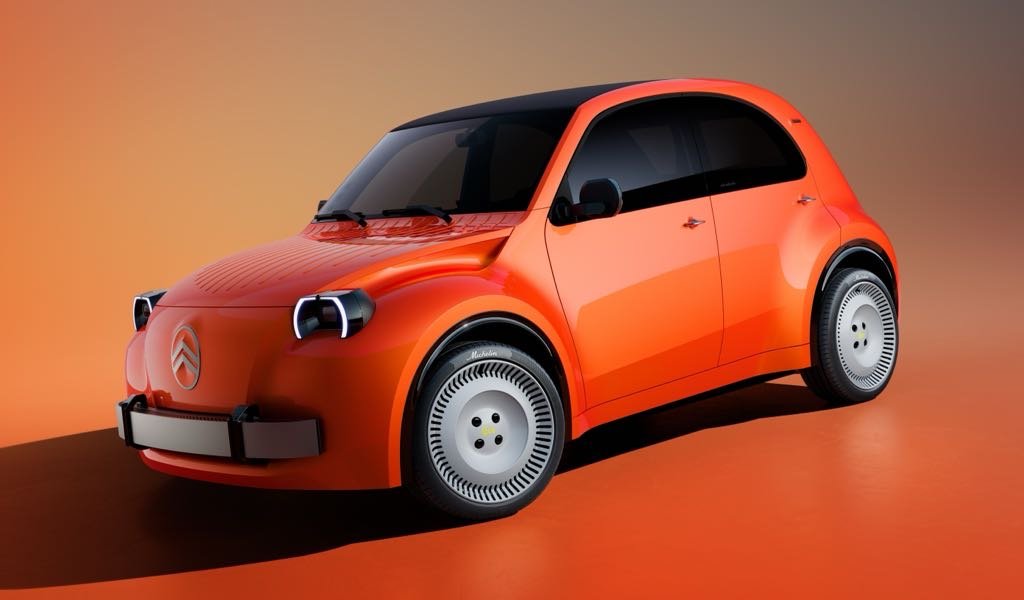
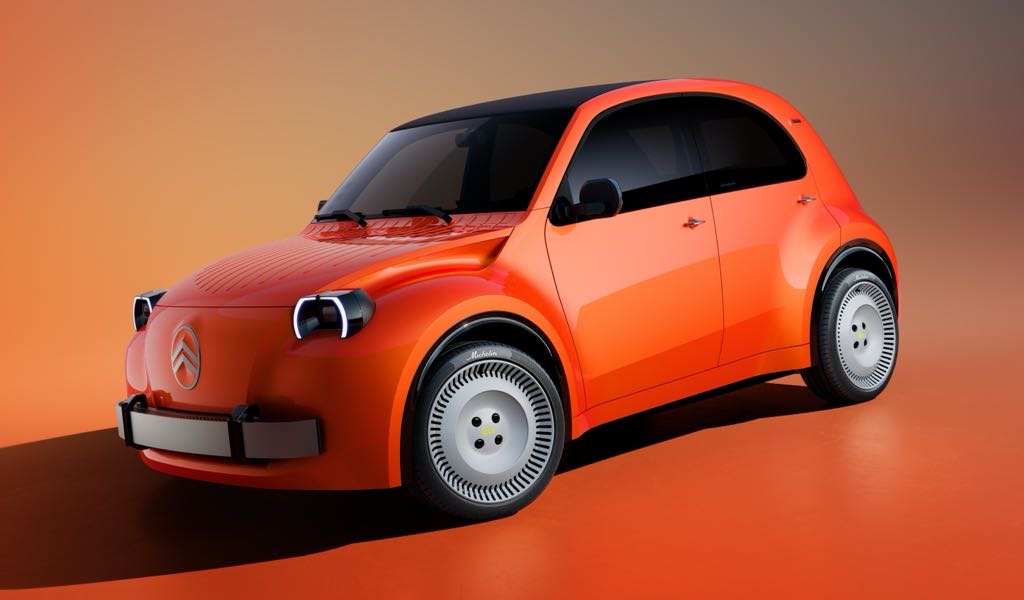
Citroën has unveiled the 2 CV Concept at the 2026 Paris Motor Show, reinterpreting its iconic small car as a compact electric vehicle. The concept draws inspiration from the original 2 CV, which debuted in 1948, and focuses on affordability, practicality and lightweight construction. The French carmaker says a production model based on this concept is expected to join its lineup by 2028.
The proposed model is intended to make electric mobility more accessible, with a targeted starting price of around €15,000. Citroën also plans to manufacture the vehicle in Europe, with the model being developed to comply with future European E-Car regulations.
Citroën 2 CV Concept: Design and dimensions
The concept measures 3.76 metres in length, making it smaller than the original 2 CV. Its compact dimensions are intended to make it easier to drive and park, particularly in urban environments.
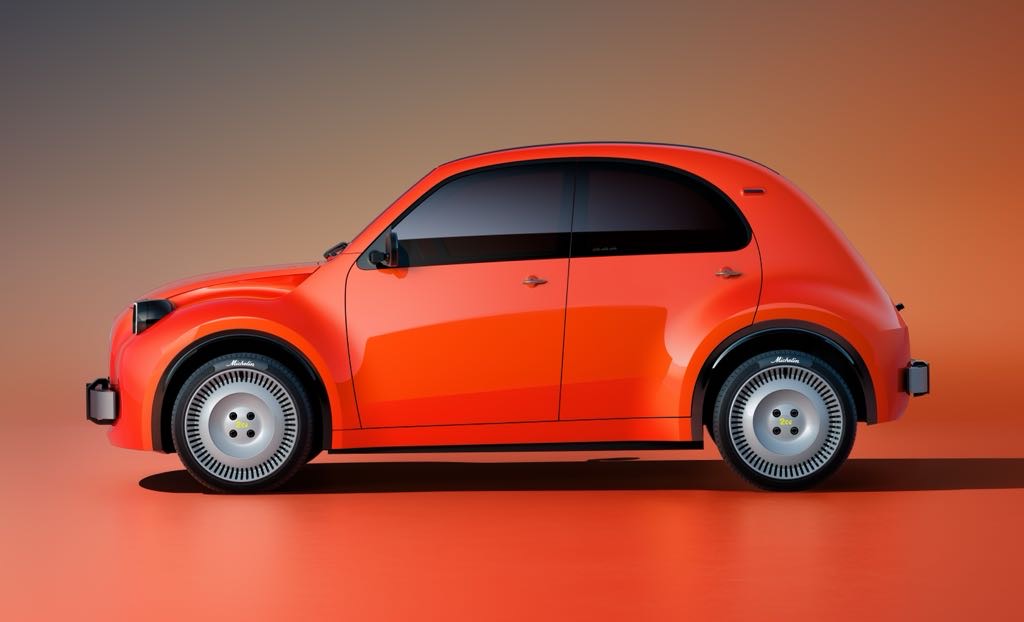
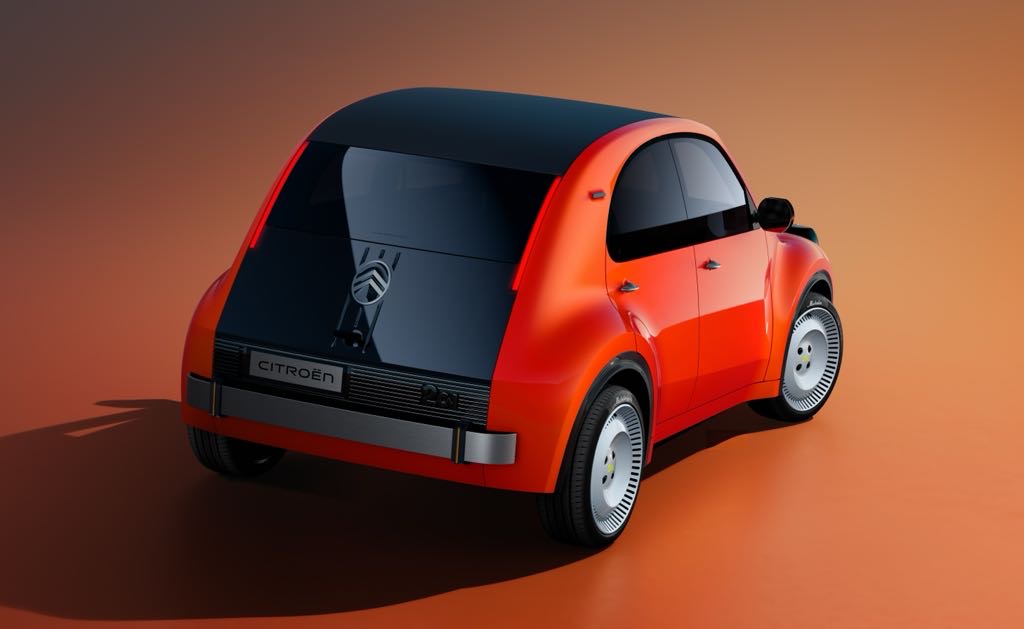
The exterior retains several recognisable elements of the original car, including rounded headlamps, a curved roofline, rounded wheel arches and a distinctive rear design. These details are combined with contemporary LED lighting, sculpted body panels and 18-inch steel wheels inspired by the original model.
Finished in an orange-based Infra Red shade with yellow and red highlights, the concept also features a black tailgate section extending towards the rear bumper. Other heritage-inspired details include heart-shaped stickers, tyre designs developed with Michelin and markings referencing 1948, 1990 and 2026 — the years of the original car’s launch, the end of its production and the concept’s unveiling, respectively.
Citroën 2 CV Concept: Interior and features
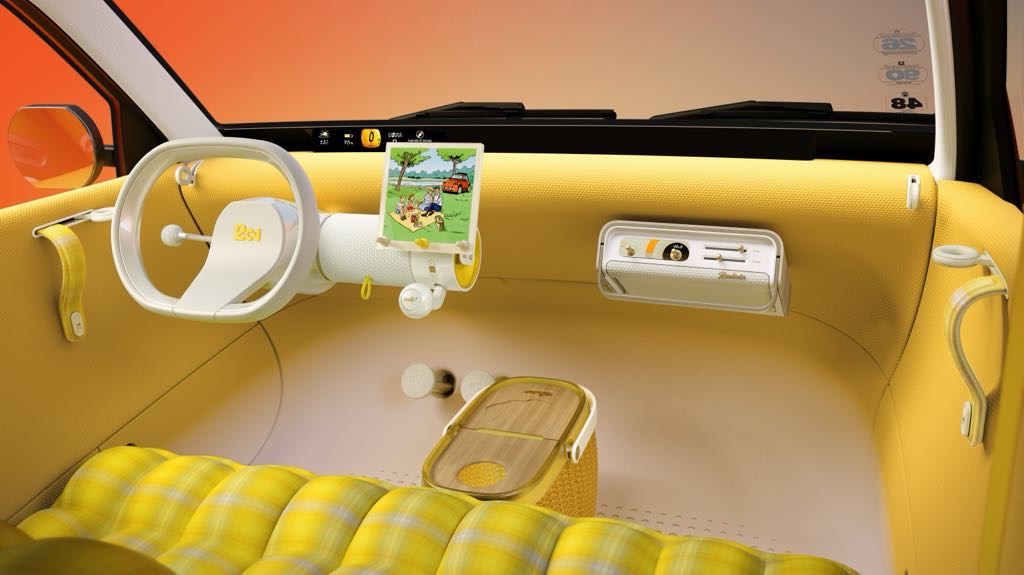
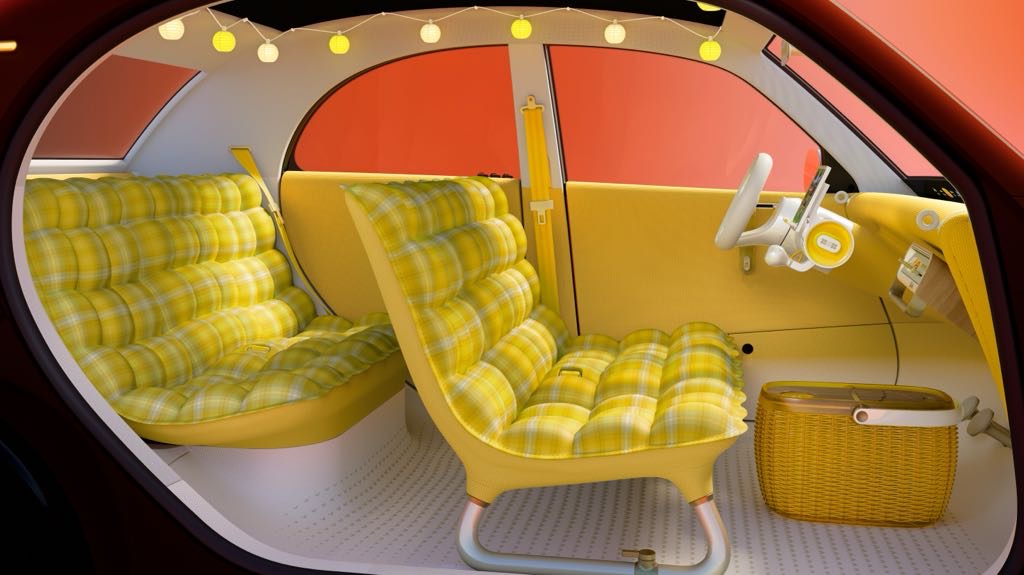
The cabin follows a minimalist approach, with Citroën prioritising passenger space and practical storage over a conventional dashboard layout. The interior features wide seats with Citroën Advanced Comfort technology, recessed door panels and a removable storage basket in place of a traditional centre console.
The driver gets a single-spoke steering wheel, a simplified control layout and a Citroën Smart Vision display designed to keep essential information within view. An 8-inch touchscreen features graphics inspired by comic books, while a detachable unit called Radioën doubles as a portable speaker.
A fabric sunroof adds to the open cabin design. The interior also uses tartan seat upholstery, beige accents and textured surfaces inspired by woven materials. Storage compartments in the doors, designed with space for eggs, reference the original 2 CV’s emphasis on everyday practicality.
Citroën 2 CV Concept: Focus on weight and repairability
Citroën is targeting a vehicle weight of around one tonne. The company aims to keep the car relatively light to reduce battery requirements, control costs and deliver a driving range suited to everyday journeys. However, battery capacity, range, charging times and other technical specifications have not been announced.
The concept also explores ways to simplify production and maintenance. Features such as independently replaceable bumpers and simpler body panels are intended to make repairs more straightforward.
Michelin has contributed a tyre-related technology described as a universal digital twin of the tyre. According to Citroën, the system is designed to monitor tyre condition continuously and help the vehicle adapt its behaviour to its surroundings.
Citroën 2 CV Concept: Production plans
The 2 CV Concept previews a potential addition to Citroën’s electric vehicle range, positioned between the Ami and the C3. The proposed production model is expected within the next two years, with 2028 indicated as the target year.
The planned starting price of approximately €15,000 places affordability at the centre of the project’s objectives. However, the concept remains a preview of a future vehicle, and Citroën has not yet disclosed final production specifications, battery details or market-specific launch plans.
Rather than recreating the original 2 CV outright, the concept applies its predecessor’s emphasis on simplicity and accessibility to electric mobility. Whether the eventual production model can meet its proposed price target while delivering the expected practicality and usability will become clearer as further details emerge.