New Nissan Terrano Leaked: Design, Engines, India Launch Details


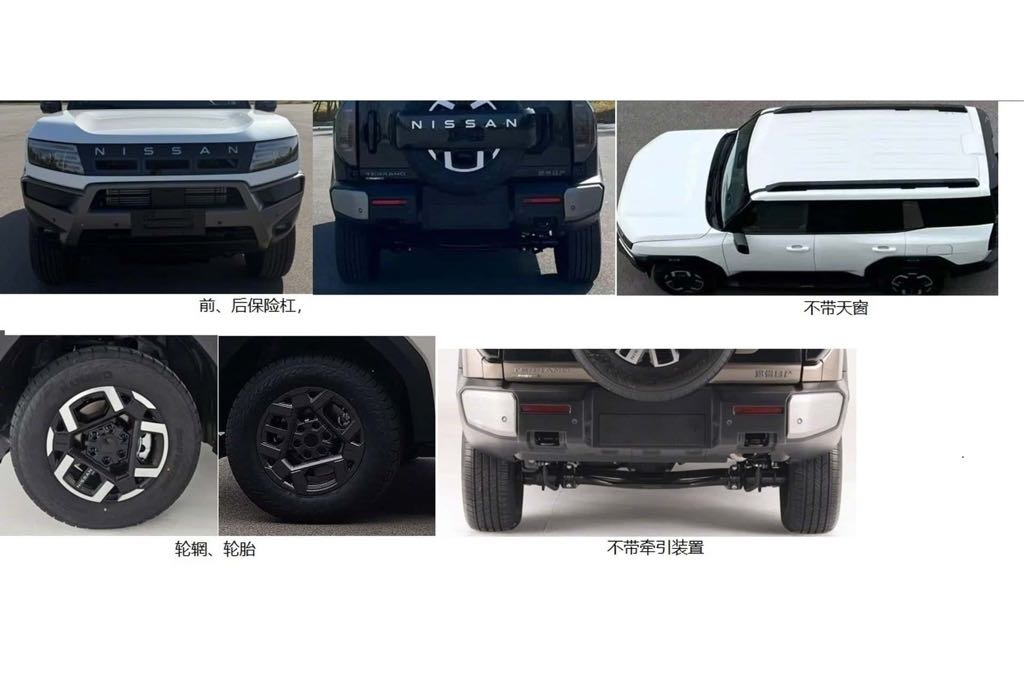
Images of the production-spec Nissan Terrano have surfaced online through Chinese regulatory filings, offering the first look at the revived SUV ahead of its expected global debut in early 2027.
Nissan had previewed the return of the Terrano nameplate in April 2026 through a rugged-looking concept. The production model retains much of the concept’s design, featuring an upright stance, boxy proportions and prominent exterior detailing. The SUV is based on a body-on-frame platform developed by Chinese automaker Dongfeng, Nissan’s joint venture partner in China.
2027 Nissan Terrano: Design and dimensions
According to the regulatory documents, the new Terrano measures 5098 mm in length, 1979 mm in width and 1961 mm in height. It has a wheelbase of 2850 mm, placing it in the full-size SUV category.
The front fascia features squarish LED headlamps, a three-slot grille with Nissan lettering and a large bumper incorporating a silver-finished bull bar. The overall styling is similar to the Terrano PHEV concept showcased earlier this year.
On the sides, the SUV gets prominent body cladding, roof rails and a large glasshouse with a distinctive kink towards the rear. It rides on 18-inch alloy wheels, with 19-inch wheels available as an option.
At the rear, the design includes vertically positioned LED tail-lamps, a tailgate-mounted spare wheel and a chunky bumper. Images of the cabin have not surfaced so far. However, regulatory information indicates that the SUV will feature a two-row seating configuration.
2027 Nissan Terrano: Engine and powertrain details
Unlike the concept, which was showcased exclusively with a plug-in hybrid setup, the production-spec Terrano will be available with petrol and diesel powertrains as well. Four-wheel drive will be standard across the range.
The plug-in hybrid version combines a 2.0-litre turbo-petrol engine producing 207 HP with a 78 HP electric motor and an LFP battery pack. The battery capacity has not been disclosed. The combined system output is rated at 272 HP, while the claimed top speed stands at 180 km/hr.
The conventional petrol version gets a 2.0-litre, four-cylinder turbocharged engine producing 258 HP. Buyers opting for diesel will get a 2.3-litre, four-cylinder engine developing 190 HP. Both versions have a claimed top speed of 170 km/hr.
The use of a Dongfeng-developed ladder-frame platform suggests that the new Terrano will retain the traditional underpinnings associated with large SUVs. However, details regarding its transmission options, off-road hardware and other mechanical specifications are yet to be revealed.
Will the new Nissan Terrano launch in India?
Nissan is understood to have evaluated the possibility of bringing the revived Terrano to India. Earlier reports indicated that the SUV could arrive as a locally assembled CKD model, with an estimated starting price of around Rs. 40 lakhs (ex-showroom).
If launched at this price point, the Terrano could compete with established ladder-frame SUVs such as the Toyota Fortuner. Its body-on-frame construction and standard four-wheel-drive system would give it a different positioning from most monocoque SUVs in the segment.
However, Nissan has not confirmed an India launch or disclosed any market-specific plans. The company’s decision could depend on factors such as localisation, pricing and the suitability of the available powertrains for the Indian market.
More details about the SUV, including its interior, equipment and market availability, are expected to emerge closer to its official unveiling, which could take place in the first quarter of 2027.